
Plenary Talks
| David N. Payne ORC, Univ of Southampton, UK Nanyang Technological University, Singapore Title: No Gain Without Payne |
| Biography: Professor Sir David Neil Payne CBE FRS FREng is a leading Professor at the University of Southampton and Director of the Optoelectronics Research Centre. A world class pioneer of technology, his work has had a great impact on telecommunications and laser technology over the last forty years. The vast transmission capacity of today's internet results directly from the erbium-doped fibre amplifier (EDFA) invented by David and his team in the 1980s. His pioneering work in fibre fabrication in the 70s resulted in almost all of the special fibres in use today including fibre lasers which are currently undergoing rapid growth for application in manufacturing and defence. David has made numerous leading contributions to many diverse fields of photonics and is widely acknowledged as an inventor of key components. Currently his main research interest is high-power fibre lasers. With US funding, he led the team that broke the kilowatt barrier for fibre laser output to international acclaim and now holds many other fibre laser performance records. An original member of the Highly Cited Researchers (USA) he is honoured as one of the most referenced, influential researchers in the world. He has published over 650 Conference and Journal papers and is a frequent plenary and invited speaker at major international optics conferences. As an entrepreneur David's activities have led to a cluster of 11 photonics spin out companies in and around Southampton - helping to boost the local economy. He founded SPI Lasers PLC, which has recently been purchased by the Trumpf Corporation of Germany for $40M. Recently elected Chairman of the Marconi Society and to the Russian Academy of Sciences, David is a fellow of the Royal Society and the Royal Academy of Engineering. He became a Commander of the British Empire in the 2007 New Years Honours list In addition he has been awarded the top American, European and Japanese prizes in pnotonics. Recent awards include the Marconi Prize in 2008and the 2007 IEE Photonics Award the first to be awarded to a person outside the USA. Most recently, in 2010, David received the AlLU (Association of Laser Users) Award for his pioneering work with fibre lasers. |
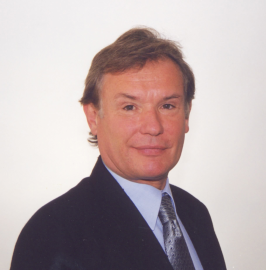
| Eric Mazur Harvard Univ, USA Title: Extreme Optics with Zero Refractive Index |
| Biography: Eric Mazur is the Balkanski Professor of Physics and Applied Physics and Dean of Applied Physics at Harvard University, Member of the Faculty of Education at the Harvard Graduate School of Education, and President of the Optical Society. Mazur is a prominent physicist known for his contributions in nanophotonics, an internationally recognized educational innovator, and a sought after speaker, In education he is widely known for his work on Peer Instruction, an interactive teaching method aimed at engaging students in the classroom and beyond In 2014 Mazur became the inauqural recipient of the Minerva Prize for Advancements in Higher Education. He has received many awards for his work in physics and in education and has founded several successful companies. Mazur is Chief Academic Advisor for Turning Technologies, a company developing interactive response systems for the education market. Mazur has widely published in peer-reviewed journals and holds numerous patents. He has also written extensively on education and is the author of Peer Instruction: A User's Manual (Prentice Hall1997), a book that explains how to teach large lecture class-es interactively, and of the Principles and Practice of Physics (Pearson, 2015), a book that presents a groundbreaking new approach to teaching introductory calculus-based physics. Mazur is a leading speaker on optics and on education. His motivational lectures on interactive teaching, educational technology, and assessment have inspired people around the world to change their approach to teaching. |
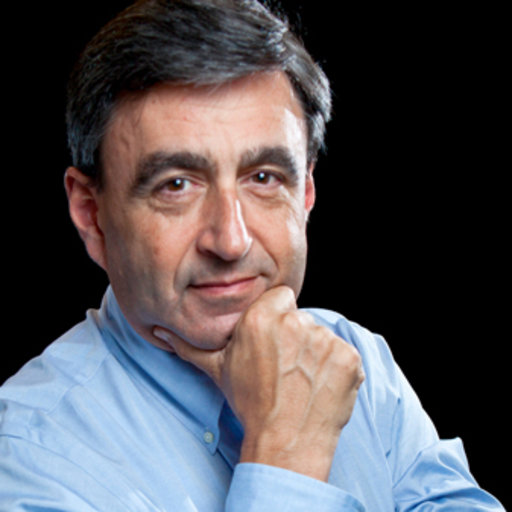
| Connie Chang-Hasnain Univ. of California, Berkeley, USA Title: VCSEL Arrays for 3D Sensing and lmaging |
Biography: Connie Chang-Hasnain is Associate Dean for Strategic Alliances of College of Engineering and Whinneny Distinguished Chair Professor in Electrical Engineering and Computer Sciences, at the University of California, Berkeley. She has been the Founding Co-Director of Tsinghua-Berkeey Shenzhen Institute since 2015. She is also the Chief Academic Officer of Berkeley Education Alliance for Research in Singapore(BEARS) and Program Leader of BEARS' SinBeR-ISE (Singapore Berkeley Research Initiative on Sustainable Energy) program since April 2015.Prof.Chang-Hasnainreceived her Ph.D. from UC Berkeley in 1987. Prior to joining the Berkeley faculty, Dr Chang-Hasnain was a member of the technical staff at Bellcore (1987-1992) and Assistant Professor of Electrical Engineering at Stanford University(1992-1995).Professor Chang-Hasnain has been honored with many awards including the UNESCO Medal For the Development of Nanoscience and Nanotechnologies (2015)IEEE David Sarnoff Award (2011), the OSA Nick Holonyak JrAward (2007), etc. Additionally, she has been awarded with a National Security Science and Engineering Faculty Fellow-ship by the US Department of Defense (2008), a Humboldt Research Award (2009), and a Guggenheim Fellowship(2009) She was a member of the USAF Scientific Advisory Board, the IEEE LEOS Board of Governors, OSA Board of Directors, and the Board on Assessment of NIST Programs National Research Council. She was the Editor-in-Chief of Journal of Lightwave Technology 2007-2012. |
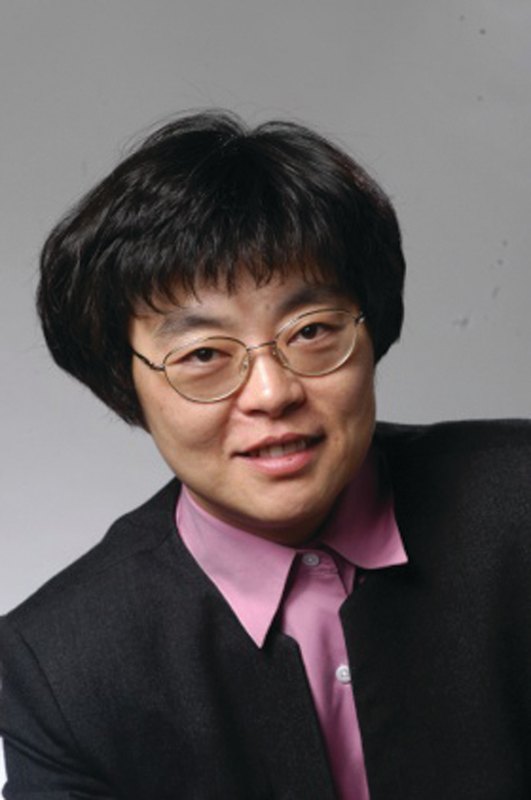
| Peter Winzer Nokia Bell Laboratories, USA Title: Future Network Scaling and the Need for Massive Opto-Electronic Array Integration |
Biography: Peter J. Winzer received his Ph.D. from the Vienna University of Technology Austria, where he worked on space-borne lidar and laser communications for the European Space Agency. At Bell Labs since 2000, he has focused on many aspects of fiber-optic communications, including advanced optical modulation, multiplexing, and detection, He has contributed to several high-speed optical transmission records and field trials from 100 Gb/s to 1 Tb/s and has been globally promoting spatial multiplexing to overcome the optical networks capacity crunch. He has widely published and patented and is actively involved with the IEEE Photonics Society and the OSA, including service as Editor-in-Chief of the lEEE/OSA Journal of Lightwave Technology, Program Chair of ECOC2009, and Program/General Chair of OFC 2015/17.Dr Winzer is a Highly Cited Researcher, a Bell Labs Fellow, a Fellow of the lEEE and the OSA, and an elected member of the US National Academy of Engineering. |

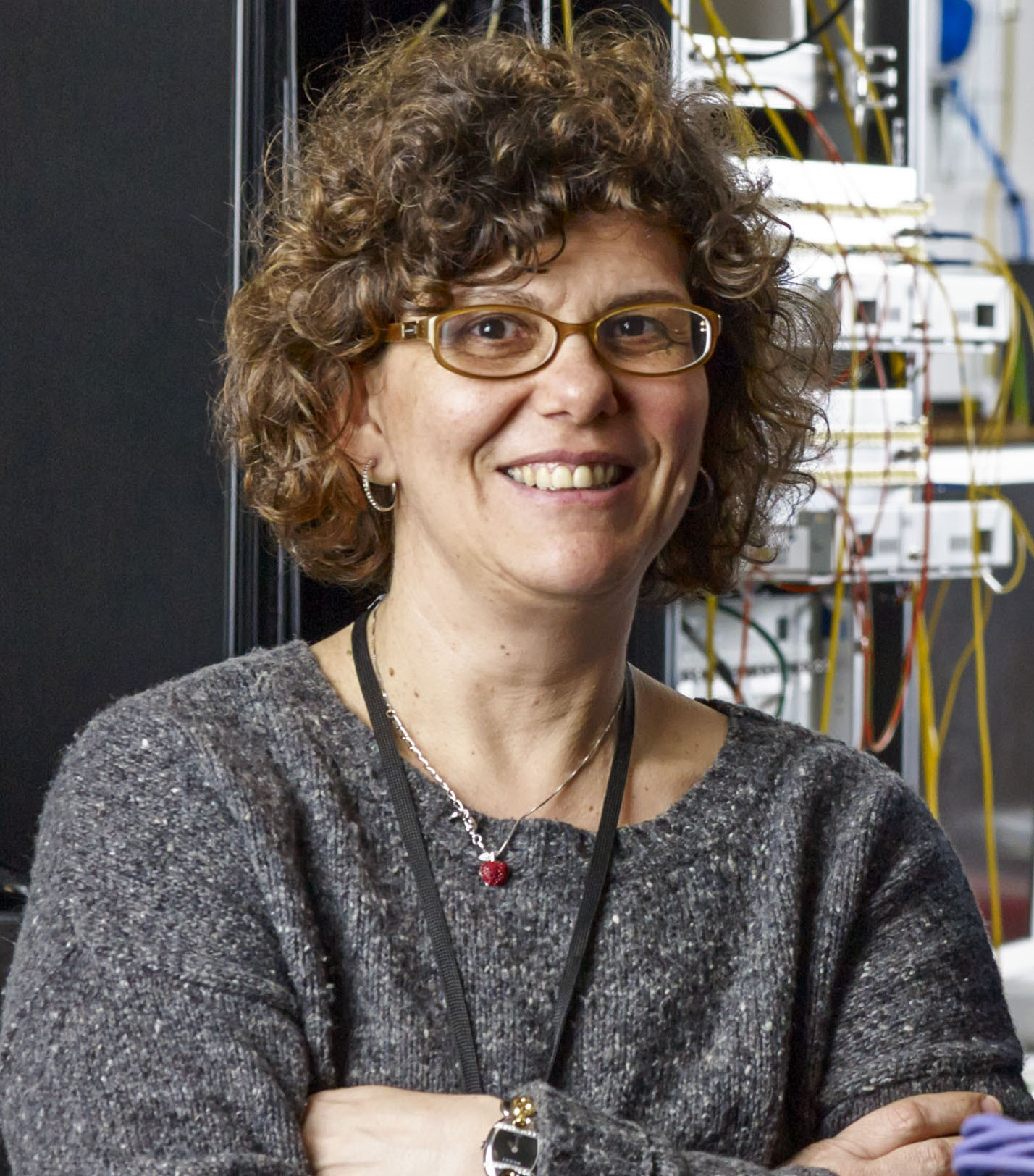
| Dimitra Simeonidou Univ of Bristol, UK Title: Ultimate Optical-Wireless Network Convergence: Vision, Architecture and Real-Life Deployments |
| Biography: Dimitra is a Full Professor at the University of Bristol, the Director of the Smart Internet Lab (www.bristol.ac.uk/smart), the Chief Scientific Officer (CSO) of Bristolls Open and the Head of the High Performance Networks group (HPN), a Royal Society Wolfson scholar. Since 2015, Dimitra has been the technical architect and the CSO of the smart city project Bristols Open (www.bristolisopen.com), delivering the world's first open and programmable experimental test-bed at city-scale. Her research is focusing in the fields of High Performance Networks Software Defined Networking, Network Convergence and Smart City infrastructures. She is the author and co-author of over 400 publications, numerous patents and several major contributions to standards. She worked in Alcatel Submarine Networks as a Principle Engineer and she has been co-founder of two spin-out companies, The latest company is the University of Bristol, venture capital funded spin-out Zeetta Networks (http://www.zeetta.com), delivering SDN solutions for enterprise networks. Since 2015, Dimitra has been the technical architect and the CSO of the smart city project Bristol ls Open (www,bristolisopen,com) delivering the world's first open and programmable experimental test-bed at city-scale. |
Keynote Banquet Talk
Nonlinear terahertz spectroscopy: Driving electrons, ions, dipoles, and spins
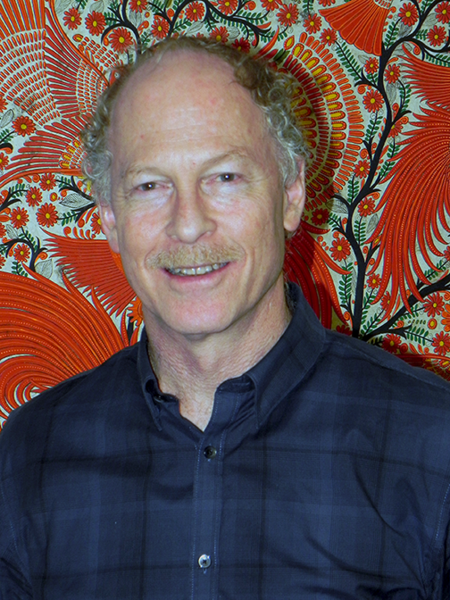
Keith Nelson
Massachusetts Institute of Technology. USA
Biography: Keith Nelson received hisPh.D.in Physical Chemistry from Stanford University in 1981and after a postdoctoral stint at UCLA he joined the faculty at MIT in 1982.He has worked on discovery of new light-matter interactions and their exploitation for spectroscopy and control of coherent acoustic waves, lattice and molecular vibrations, excitons, spins, and their admixtures with light. He has developed novel methods for study of solid-state chemical reactions, crystals near phase transitions, glass-forming liquids, electronic excited-state dynamics, thermal transport, and matter far from equilibrium. He has pioneered tabletop generation of strong terahertz-frequency fields and nonlinear terahertz spectroscopy.

中山大学

OEMT

OSA

IEEE Photonics Soceity

华南师范大学

中山大学电子与信息工程学院

SKLLMD

暨南大学

暨南大学光子技术研究院