
Plenary Talks
| Connie J. Chang-Hasnain UC Berkeley, USA Title: VCSELs for 3D Sensing and 5G Communications |
Biography: Connie Chang-Hasnain is Whinnery Distinguished Chair Professor in Electrical Engineering and Computer Sciences, at the University of California, Berkeley. She was the Associate Dean for Strategic Alliances of College of Engineering since 2014-2019 and Chair of the Nanoscale Science and Engineering Graduate Group at UC Berkeley 2006-2017. Prior to joining the Berkeley faculty, Dr. Chang-Hasnain was a member of the technical staff at Bellcore (1987–1992) and Assistant Professor of Electrical Engineering at Stanford University (1992–1995). She is a fellow of IEEE, OSA and National Academy of Inventors. She is member of the US National Academy of Inventors and National Academy of Engineering. Professor Chang-Hasnain’s research interests include semiconductor optoelectronic devices, materials and applications. She pioneered the first planar VCSEL structure using proton implantation for array fabrication with Gbps modulation, first MEMS-VCSEL for wavelegnth tuning, and the first 1000-elecment VCSEL arrays for 3D imaging. Prof. Chang-Hasnain has been honored with many awards including the Okawa Prize (2018), UNESCO Medal For the Development of Nanoscience and Nanotechnologies (2015), IEEE David Sarnoff Award (2011), and the OSA Nick Holonyak Jr. Award (2007). Additionally, she has been awarded with a Vannevar Bush Faculty Fellowship, a Humboldt Research Award, and a Guggenheim Fellowship. She was a member of IEEE LEOS Board of Governors, OSA Board of Directors, and the Board on Assessment of NIST Programs, National Research Council. She was the Editor-in-Chief of Journal of Lightwave Technology 2007-2012. Professor Chang-Hasnain is the OSA President-Elect in 2020 and will be the President in 2021. |

| Min Gu University of Shanghai for Science and Technology, China Title: Artificial intelligence enabled by nanophotonics |
| Biography: Professor Gu is Executive Chancellor of the University Council and Distinguished Professor of University of Shanghai for Science and Technology. He was Distinguished Professor and Associate Deputy Vice-Chancellor at RMIT University and a Laureate Fellow of the Australian Research Council. He is an author of four standard reference books and has over 500 publications in nano/biophotonics. He is an elected Fellow of the Australian Academy of Science and the Australian Academy of Technological Sciences and Engineering as well as Foreign Fellow of the Chinese Academy of Engineering. He is also an elected fellow of the AIP, the OSA, the SPIE, the InstP, and the IEEE. He was President of the International Society of Optics within Life Sciences, Vice President of the Board of the International Commission for Optics (ICO) (Chair of the ICO Prize Committee) and a Director of the Board of the Optical Society of America (Chair of the International Council). He was awarded the Einstein Professorship, the W. H. (Beattie) Steel Medal, the Ian Wark Medal, the Boas Medal and the Victoria Prize for Science and Innovation. Professor Gu is a winner of the 2019 Dennis Gabor Award of SPIE. |

| Dimitra Simeonidou University of Bristol, UK Title: 5G and Beyond: Enabling the Future Networked Society |
Biography: Dimitra Simeonidou is a Full Professor at the University of Bristol, the Co-Director of the Bristol Digital Futures Institute and the Director of Smart Internet Lab. Her research is focusing in the fields of high performance networks, programmable networks, wireless-optical convergence, 5G/B5G and smart city infrastructures. She is increasingly working with Social Sciences on topics of digital transformation for society and businesses. Dimitra has been the Technical Architect and the CTO of the smart city project Bristol Is Open. She is currently leading the Bristol City/Region 5G urban pilots. She is the author and co-author of over 600 publications, numerous patents and several major contributions to standards. She has been co-founder of two spin-out companies, the latest being the University of Bristol VC funded spin-out Zeetta Networks, http://www.zeetta.com, delivering SDN solutions for enterprise and emergency networks. Dimitra is a Fellow of the Royal Academy of Engineering, a Fellow of the IEEE and a Royal Society Wolfson Scholar. |

| Chongjin Xie Alibaba Group, USA Title: Optical Technologies for Hyperscale Cloud Computing |
| Biography: Chongjin Xie is a senior director and chief communication scientist in Alibaba Infrastructure Service, Alibaba Group, leading an optical network research, architecture, design and testing team to develop datacenter optical interconnects and networking technologies to support Alibaba online platform and cloud services. Prior to joining Alibaba Group in 2014, Dr. Xie was a distinguished member of technical staff at Bell Labs, Alcatel-Lucent (now Nokia), doing research on optical communication systems and networks. He did his postdoctoral research at Chalmers University of Technology in Sweden from 1999 to 2001, and received his M.Sc. and Ph.D. degrees from Beijing University of Posts & Telecommunications in 1996 and 1999, respectively. Dr. Xie has published one book, 3 book chapters and over 200 journal and conference papers. He is an associate editor of Journal of Lightwave Technology, a program chair of OFC’2019 and served as chairs, TPC chairs or TPC members in many conferences. Dr. Xie is a Fellow of OSA and a senior member of IEEE. |
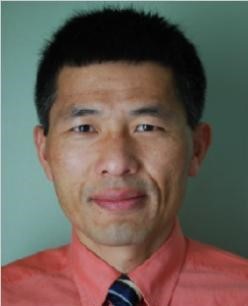
| Ton (A.M.J. ) Koone Eindhoven University of Technology, Netherlands Title: Optical technologies to disclose the spatial diversity dimension in systems and networks |
Biography: Ton Koonen is a full professor of Electro-Optical Communications and Chair of Broadband Communication Networks in the department Telecommunication Technology and Electromagnetics. His areas of specialization include computer systems, architectures and networks, telecommunications, broadband and optical fiber-to/in-the-home. Ton has initiated and led several European and national R&D projects in this area on dynamically reconfigurable hybrid fiber access networks, fiber-wireless, packet-switched access, and short-range multimode (polymer) optical fiber networks, and label-controlled optical packet routed networks. His current research interests are optical fiber-supported in-building networks (including optical wireless communication techniques, radio-over-fiber techniques, and high-capacity plastic optical fiber (POF) techniques), optical access networks, and spatial division multiplexed systems. His group has, for example, developed a Wi-Fi network that transmits signals via infrared light, achieving a speed of 42.8 Gb/s, 100 times faster than current networks generally achieve. At this speed, an entire film could be transferred in one second. Ton Koonen received his MSc (with honors) in Electrical Engineering from TU/e in 1979.In that year, he joined Philips Telecommunicatie Industrie (Telecommunications Industry). From 1987 to 2000 he worked on high-speed transmission systems and optical fiber systems for hybrid access networks at Bell Laboratories within Lucent. He has also worked as a professor at the University of Twente, holding a chair on Photonic Networks. Ton is chairman of the Electro-Optical Communication Systems (ECO) group, part of the COBRA institute and from September 2012 he was also vice-dean of the department Electrical Engineering. Ton is a Bell Labs Fellow, IEEE Fellow, OSA Fellow, ERC Advanced Investigator Grant Winner, Distinguished Guest Professor of Hunan University, Changsha, China, and has frequently acted as an auditor and reviewer on national and EC projects. Currently, he is involved in a number of access/in-home projects in the Freeband program, the IOP GenCom program, and the EC FP6 IST and FP7 ICT programs. He has authored and co-authored more than 250 conference and journal publications. |

| Han Li China Mobile, China Title: Vision and Trend Analysis for Transport Networks in SG Era |
| Biography: Han Li graduated from Beijing University of Posts and Telecommunications and obtained his Ph.D in 2002. He is the chief expert of China Mobile and the deputy director of the China Mobile Research Institute. He has extensive knowledge of SPN, PTN, OTN, PON and synchronization technology, and has published more than 50 articles, 100 patents, and 200 ITU-T contributions. He is an editor of several ITU-T recommendations and IETF RFCs. He has rewarded the second prize of the National Science and Technology Progress for three times, the silver prize of the Nation Patent Award for one time and the second prize of the Nation Patent Award for two times. |
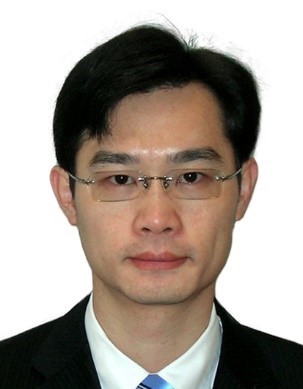
| Bill Wang Huawei, China Title: Embracing F5G Era, Achieving Ubiquitous Optical Connections |
| Biography: Bill Wang is the Chief Strategy Officer and Vice President of Huawei Transmission & Access Product Line. He is currently responsible for the strategy planning and collaborations with industry and academic partners of Huawei’s optical network technologies and products. Prior to current position, Bill had been the director of the Huawei Optical Network research center and the direct of Huawei OSN8800 product. As a veteran with 20 years of experience in the optical industry, Bill has a deep insight of the global ICT trends, and extensive knowledge in bridging the technology development and commercial practice. |


北京邮电大学

IPOC

FCMT

CLP

Huawei

凌云光

镓族科技

OSA

IEEE Photonics Soceity

SPIE

中国光学学会