
Plenary Talks
| Ruxin Li ShanghaiTech University, China Title: The free-electron laser based on a laser accelarator |
| Biography: Prof. Ruxin Li is a professorin Physics of Shanghai lnstitute of Opticsand Fine Mechanics (SOM), ChineseAcademy of Sciences and ShanghaiTechUniversity. He was elected as the OSAFellow in 2014 and elected as the academician of Chinese Academy of Sciencesin 2017. He is the vice chairman of the Chinese OpticalSociety and he was the chairman of the Asian Intense LaserNetwork during 2010-2014. He is the committee member ofthe International Committee on Ultra-Intense Lasers (ICUlL).His research interests lie in the development of petawattlevel high peak power ultrafast lasers, laser wakefield ac-celeration of electrons, high order harmonic generation inatoms and molecules, and femtosecond laser filamentationnonlinear optics. |
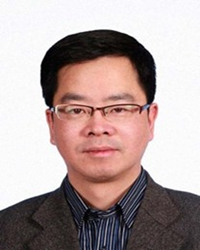
| Xiang Liu Futurewei Technologies, USA Title: Emerging Optical and Photonic Technologies for Communications and Beyond |
Biography: Xiang Liu is Vice President for Optical Transport and Access at Futurewei Technologies, focusing on optical technologies, standards, and industry development for optical transport and access networks. Xiang has more than 20 years of working experience in the optical communication industry. Before joining Futurewei, he had been with Bell Labs working on high-speed optical transmission technologies for 14 years. He has authored over 350 publications and holds over 100 US patents. Xiang received the Ph.D. degree in applied physics from Cornell University in 2000. He is a Fellow of the IEEE, a Fellow of the OSA, a Deputy Editor of Optics Express, a Co-Editor of the IEEE Communications Magazine's Optical Communications Series, an Advisory Board member of NGOF, and a steering committee member of ACP. Xiang has served as a Technical Program Co-Chair of OFC 2016, and a General Co-Chair of OFC 2018. |
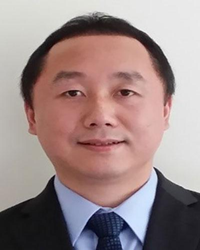
| Shanhui Fan Stanford University, USA Title: Explorations of topological photonics in synthetic dimensions |
Biography: Shanhui Fan is a Professor of Electrical Engineering, a Professor of Applied Physics (by courtesy), a Senior Fellow of the Precourt Institute for Energy, and the Director of the Edward L. Ginzton Laboratory, at the Stanford University. He received his Ph. D in 1997 in theoretical condensed matter physics from the Massachusetts Institute of Technology (MIT). His research interests are in fundamental studies of solid state and photonic structures and devices, especially photonic crystals, plasmonics, and meta-materials, and applications of these structures in energy and information technology applications. He has published approximately 600 refereed journal articles, has given over 380 plenary/keynote/invited talks, and was granted 69 US patents. His publications have been cited over 90,000 times according to Google Scholar. He has cofounded two companies aiming to commercialize high-speed engineering computations as well as radiative cooling technology respectively. Prof. Fan received a National Science Foundation Career Award (2002), a David and Lucile Packard Fellowship in Science and Engineering (2003), the National Academy of Sciences W. O. Baker Award for Initiative in Research (2007), the Adolph Lomb Medal from the Optical Society of America (2007), a Vannevar Bush Faculty Fellowship from the U. S. Department of Defense (2017), and a Simons Investigator in Physics (2021). He is a Thomson Reuters Highly Cited Researcher in Physics since 2015, and a Fellow of the IEEE, the American Physical Society, the Optical Society of America, and the SPIE. |
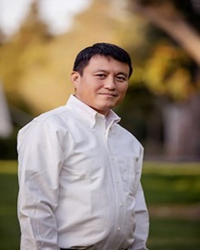
| Tobias J. Kippenberg EPFL, Switzerland Title: Photonic Chip based Frequency Combs |
Biography: Tobias Kippenberg earned his B.A. from the Technical University of Aachen, Germany, M.S. and Ph.D. from the California Institute of Technology, USA, and Habilitation from the Ludwig-Maximilians-Universität München, Germany. He is currently Full Professor of Physics and Electrical Engineering at EPFL. In 2007, Kippenberg and his team discovered the ability of optical microresonators to generate optical frequency combs via parametric interactions. This discovery showed that as an alternative to the use of mode-locked lasers, a CW laser can be converted into a broadband frequency comb via nonlinear wave mixing, overcoming passive cavity dispersion. Kippenberg has led the field in novel microfabrication techniques, both in crystalline microresonators and through his introduction and perfection of the photonic damascence process in the silicon nitride platform. He has received the Helmholtz Prize for Metrology, Fresnel Prize of the European Physical Society, European Frequency and Time Forum (EFTF) Young Scientist Award, Swiss National Latsis Award, Klung Wilhelmy Wissenshcafts Preis and the ZEISS Research Award. He is a Fellow of OSA and the American Physical Society. In 2021, he received OSA's R.W. Wood Prize "for pioneering contributions to the realization of chip-scale optical frequency combs." |


浙江大学

上海交通大学校

Huawei

FCMT

FiberHome

凌云光

Light

OPTICA

SPIE

IEEE Photonics Soceity
中国光学学会